Thanks

His pruning was interrupted.
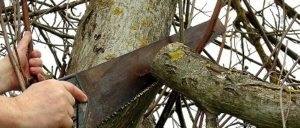
It was late in the afternoon when the nice old gentleman from number twenty-seven was half way up his ladder, sawing through a dead branch. As it fell to the ground he glanced across his rear fence and couldn’t fail to notice that the old lady that lived there, dressed in what looked like a nightie, was tip-toeing across the sloping roof of her back lean-to.

Transfixed by this bizarre sight and at the same time wondering what she was up to, he was abruptly woken out of his speculation when she fell. He watched in horror as she did some sort of pirouette, fall over and tumble off the end of the slanting roof, landing with a crash somewhere out of sight.

Although thoroughly shaken by what he saw, he immediately climbed down and ran to the fence. There, he soon realised there was no way of climbing over it. Instead, he ran out into the street and raced around the block. When he reached the house, he found the front door closed. He then ran down the side, only to find a locked gate barring his way. Moving back a few paces he ran at it. He injured his shoulder badly doing this, but the gate broke open.

As he rounded the house he found the old lady lying unconscious. He could see blood trickling down her cheek. He knew it was best not to move her, so he went into the house and found a telephone. He called for an ambulance, then sat down next to her, nursing his painful shoulder. Within minutes the ambulance arrived and they were both taken to hospital.

Over the following days the newspapers pronounced the man a hero. He was thanked by local dignitaries, appeared on the TV news, had articles written about him, and was waved and smiled at by his neighbours. He was privately bathing in the unaccustomed glory of it all, while maintaining an air of modesty.

Meanwhile, in hospital, the old lady who had remained unconscious for the first couple of days, finally woke up. When she came to, very much to the amazement of the doctors and nurses, she had her own version of the events that put her there. She claimed, with great passion, that the man from number twenty-seven was, in fact, Gregory Peck, who in cahoots with a gathering of conspiring warlocks had contrived the whole affair. This, she said, was particularly upsetting for her, as she thought Gregory was absolutely splendid in ‘The Omen’.

Naturally enough, little heed was payed to this, or passed on in any way by hospital staff. This meant that our rather elderly knight in shining armour knew nothing of these allegations.

It can be said that in a fairly humble way, on learning that she was awake and recovering, he was certainly looking forward to visiting the patient. As he approached her bed, she sat up, pointed and screamed, “That’s him!”

Thanks was sometimes something you just didn’t get.

Days

The young student who discovered the mistake was never thanked for it.

After much intense study he discovered that the present day calendar that we all rely on so naturally, without giving it a moment’s thought, is three days out. At the time that this error occurred, there had been so much discussion in academic circles about the year now being calculated to be 365 days, but followed excruciatingly by so many decimal points, brought about the slipup. So much attention being placed on the preciseness of the length of the year had let this faux pas go by unnoticed.

The printing company that flooded the market with its printing of the calendar, mainly due to its clever, eye-catching design, was responsible for the cockup. Of course, this calendar having been distributed not long after the Julian calendar was dumped and replaced by the Gregorian calendar, which conveniently rounded off the number of days to 365 and made up any shortfall by creating leap years, was a major factor in the bungle. So, because this howler occurred towards the end of the late eighteen hundreds, it went completely under the radar until the student in question did some serious digging.

At first the researching student could not believe that such a whacking great blunder could possibly have gone unnoticed. For this reason he went on for a further two months of intensive evidence gathering before deciding that his results were valid enough to make his findings known. Not knowing what authority should be made aware of such a stupendous booboo, he approached his university mentor.

The professor had a lot of time for the young man and had found his commitment to study had always been excellent. Despite this, the very idea that such a gaffe could have taken place, all because of a typo in a printed calendar, popular or not, was quite beyond belief. For this reason the professor took on the task of checking and verifying his student’s research papers.

The professor, after spending more than a week working through his student’s papers, came to the devastating conclusion that his research was correct and indeed the present day calendar was out by three days. It was a fiasco. He began to see the ramifications of it. There were global economics to consider, trade route schedules, share dividends, time locks on vaults, church services, passports, birthdays, TV programming, repeat episodes, and of course, calendars!

It was more than a fiasco, it was an imbroglio beyond anyone’s imagination.

Considering the false notion that it was a Thursday, and knowing full well that the day was in fact Sunday, he decided to spend the rest of the day in church.

He was last seen on the Friday, or more accurately the Monday, leaping from the university belfry, with witnesses saying they heard him screaming something about typos.

On the following day, the Saturday, which was in fact the Tuesday, the student followed his example.

This being the case, and being most fortunate for the rest of us, the truth of the matter has never come to light.

Different Brew

One, two,

Buckle my shoe;

Something of a different brew.

Three, four,

Knock at the door;

Playing with words galore.

Five, six,

Pick up sticks;

Poems and stories intermix.

Seven, eight,

Lay them straight:

Special meanings they create.

Nine, ten,

A big fat hen;

Tapping keys and moving pen.

Eleven, twelve,

Dig and delve;

Imaginings to note and shelve.

Thirteen, fourteen,

Maids a-courting;

Ideas and thoughts assorting.

Fifteen, sixteen,

Maids in the kitchen;

That’s what such lines are rich in.

Seventeen, eighteen,

Maids a-waiting;

Tale and verse generating.

Nineteen, twenty,

My plate’s empty;

Stop now; that is plenty!

Controversy

His friends would be thrilled with this addition to their weekend sport.

The tennis ball machine had a big hopper. It was a bargain. Second hand from a local school that had upgraded to a newer model. He’d take it to his friend’s place on the weekend. His friend has a tennis court out the back. Just about every Sunday their small group would turn up for a game or two. Now they could also get some serious practice in. Even one player could practice on their own, because it had a delayed feed to allow the player to reach the play position. It had arrived the day before and he hadn’t tried it yet.

Anybody who knew him would say he was reserved in nature. In fact, he had spent his entire life avoiding any kind of controversy. Despite this, he was excited at the prospect of seeing the thing work. He took it out of the shed and set it up on the back lawn. He loaded it with a single ball, carefully lining it up to hit the back wall of the house, away from windows.

Well, that was the plan. It went with a satisfying thump, but the aim was too high, and it hit the roof and bounced over the top of the house. He was adjusting the angle when he heard the crash, followed by several more.

The ball had struck a cyclist on the side of the head, causing him to lose balance, and tumble off into the middle of the road. An approaching truck had swerved violently to avoid running the man over and so doing had mounted the curb, bringing down a street lamp and eventually jack-knifing, coming to a standstill across the entire width of the road. This was immediately followed by three more vehicles ploughing into each other, with one bursting into flames.

It is not at all certain how long he stood there frozen to the spot, but watching a cloud of black smoke rising beyond the roof of his house reanimated him. He quickly wheeled the machine back into the shed and snapped the padlock.

He heard the sound of the ambulance as he made his way unsteadily through the house. Stepping out through his front door he was confronted by a terrible scene. Again, he just stood, unable to move. Eventually he moved forward into his front garden, where he stood with many other surrounding onlookers, watching the ensuing chaos.

Moving to one side to get a better look he kicked something. Glancing down, he saw the offending tennis ball. He immediately took out a handkerchief and pretended to blow his nose. He also pretended to drop it. Stooping, he wrapped it around the ball and stuff it all into his pocket.

He had always avoided any kind of controversy.

Tree

They lay together beneath the great oak tree.

A solitary couple, laying on a thick bed of brown leaves, holding hands. It is an isolated place, so far away from the beaten track that few ever come here. Only those that know of the existence of this wonderful example of Mother Nature come to this place. The distant drone of traffic can only just be heard. The residential area seems to be so close, yet so far from this idyllic spot.

They lay perfectly still.

They are not young lovers. The man and the woman are both in their fifties. They come here each year to lay and to look up into and through the magnificent spreading branches of this ancient oak. There is a blue, cloudless sky, beyond the branches and the leaves.

It is a private thing. This is where he was found.

“This may be what he saw,” she says.

“Yes,” he murmurs.

“This may be his last view of things in this world,” she says.

He nods and they fall silent again, paying homage to the missing member of their once happy family, their ardent tree-climber.

Eventually, their hands release and they stand.

They carefully brush one another off, then slowly make their way home.

Alone.

Pungus

It was an expensive wheelbarrow, and all padded out to make it more comfortable.

They had found a new shop to visit. The security man standing at the entrance of the supermarket, looking very much like a soldier, gave them an odd look as they approached, then took out a handkerchief and held it to his nose. The girl was used to this sort of behaviour and just rolled right on past him, into the store.

Halfway down the first aisle she stopped to look at the magnificent selection of sandwich spreads in tiny jars. She was peering at one of the labels, asking it if it fancied a little tuna and lobster spread on its meat, when a fellow shopper tripped over the appendage.

The girl bent down and lifted its tail and tucked it back in next to it.

“So sorry!” she said.

The other woman sniffed indignantly and walked on.

“Do try to keep it in with you,” she said and wheeled them forward again

She had no real intention of buying anything, she just liked looking at all of the things on the shelves.

It began running its claws down the sides of the barrow, making a horrible screeching noise.

“Don’t do that Pungus,” I’ve asked you before, it only brings attention to us.

It wriggled and grunted a couple of times, as a sign of not being happy.

She stopped to look back down the aisle. In an effort to cheer it up, she said, “Do you think you would like anchovy sandwich spread instead? It‘s on special this week. I could probably afford to actually buy a small jar.”

Pungus growled and shook its head.

Just as she was about to suggest another flavour, someone said, “Magnificent horns!”

The girl turned, “Pardon?”

An old man stood staring into the wheelbarrow, looking the creature over. “I said your, umm, your companion, has magnificent horns.”

“Oh! Thank you. Did you hear that Pungus?”

It nodded enthusiastically and gave a big smile, bearing all of its long yellow fangs.

‘And those eyes, do they always glow orange like that?

“Yes, most of the time. If it gets angry they go red.”

Just then, the enormous thing in the wheelbarrow threw its head back and let out a deafening belch, which materialised as a huge cloud of blue mist that slowly rose up to the ceiling. At this point the store’s alarm went off, and this was followed shortly by all of the overhead sprinklers starting up and spraying down, soaking everything.

“Oh! No!” she yelled, as she ran out into the street, along with all the other shoppers.

She almost ran with the barrow to get away before too many questions could be asked. Eventually she stopped and caught her breath. Her love of perusing shop shelves was so often cut short like this. It was some sort of reaction she supposed.

After a short rest, she went looking for another shop.

Clover

The two uniformed men sat in their military vehicle looking out at the bad weather.

Things seemed to be going from bad to worse. Firstly, the storm, accompanied by sleet and snow being whipped along by severe winds, and secondly, their military manoeuvres being disrupted by a nasty traffic accident. Well, more than disrupted, brought to an untimely standstill. The night being extremely cold, the unfortunate gentleman that had been mowed down by the speeding vehicle had been moved into a nearby building. The two men sat shivering in a large truck that had seemed to become immobilised owing to the freezing conditions.

One of them said, “We need to call this in.”

He switched the two-way radio on. There was a lot of crackling. He starts calling.

“Come in, Drover, over.”

“Are you receiving Drover? Over.”

“Repeat, are you receiving Drover? Over.”

“Repeating again, this is Clover, are you receiving me Drover? Over.”

“Roger, this is Drover. Can hardly hear you Clover, over.”

“Same here Drover, you’re only just coming over, over.”

“This is Drover. The signal is weak. We’ve had and upgraded antenna changeover, over.”

“This is Clover, Drover. Our operational manoeuvre’s schedule is running over, over.”

“Copy that. It should have been a pushover, over.”

“Yes, but a pedestrian was knocked down on the crossover, over.”

“Say again, Clover, over.”

“A civilian has been run over, Drover, over.”

“Copy that, Clover, over.”

“We are waiting for the medics, so we can hand over, over.”

“Copy that, Clover. Has the storm blown over? Over.”

“No, Drover. We have been here so long we think the engine has iced over, over.”

“Copy that, Clover.”

“We are not sure whether we can get the engine to turnover, Drover. Over”

“Copy that, Clover.”

“We may be forced to stopover. Over.”

“This is Drover, the signal is breaking up again, come in Clover. Over.”

“Did you say hangover, Clover, over.”

“Say again Drover, over.”

“Clover, did you say someone had a hangover, Drover, over.”

“No, Drover. Said we might have to stopover, over.”

“Copy that, Clover, over.”

“Hello Drover, Ambulance has arrived. We’ll let the medics take over, over.”

“Copy that, Clover. Over and out.”

“Over and out.”

The radio operator switched off. He sat back and sighed.

“I think I’ll put in a request to have our call sign changed to Daisy.”

The other grinned.

“Good idea. It’d make communications a lot easier, moreover.”

The radio operator glared at him.

“Don’t you start!”

Carrots

There is nothing like a carrot.

Carrots are really great.

Growing in the garden

Or sitting on a plate.

Eat them with a pile of peas

Or eat them in a cake.

If you want to see at night,

Eat them, for goodness sake!

But there are special orange friends,

Not sprouting from the ground.

Children love to cuddle them,

Even grownups play around.

These are the special ones.

They’re found in special places.

They’re the ones that come from a shop;

The ones with smiley faces.

We don’t get them from the garden

Or bring them home in bags.

They’re the sort we do not eat,

For they all have designer tags.

You have to keep your eye on them.

They have been known to wriggle.

And if you listen late at night,

You may even hear them giggle.

Carrots can be a comfort

To a girly friend of mine.

And they will bring back memories

From that time before,

When she was only nine.

Butterfly

It was a place to seek sanctuary and find answers.

The woman sitting in the pew at the back of the church was looking lovingly at her daughter beside her. The young child was dressed all in white, she wore a pair of butterfly wings strapped to her shoulders.

The woman remembered the question. “Mummy, can little girls fly?”

“Of course they can,” she had whispered.

The woman turned the pages of the scrapbook on her lap, her fingers slowly caressing each of the pictures in turn. “All you have to do is believe,” she had said. She remembered the joy she felt when her daughter ran through the house, crying, “Look at me Mummy, I’m learning to fly!”

The priest had noted the woman sitting alone, but had held back for a while. The woman was shaken out of her thoughts by the movement of him settling quietly beside her. He hesitated before speaking. “I thought you might want to talk,” he said. The woman nodded; she slowly closed her book and hugged it to her breast. Above her, she could see her daughter hovering in the vaulted ceiling. She turned to the priest and tried to smile. “We lived on the third floor,” she said. “All of the windows there looked out over the trees below. In the summer, butterflies would sometimes land on the ledge outside and my little girl loved to watch them. She said their wings reminded her of angels.”

She wiped her eyes with a handkerchief. “Every day my little darling would ask if little girls could fly, and every day I’d tell her that they could, if they practiced a lot.”

She took a deep breath. “I came out of the kitchen that morning to find her standing on the ledge outside. She wore the butterfly wings I’d made for her, and when she saw me she started to laugh. ‘Look at me, Mummy,’ she cried. ‘Look at me, I’m ready now, I’m flying.’”

She opened the book and offered up a large coloured photograph of the girl in her butterfly outfit.

Above her, the butterfly girl was looking down smiling, gently flapping her wings, just floating.

The distraught woman turned and looked at the priest. “Why would I do that?” she asked, with tears streaming down her cheeks. “Why would I tell my daughter something that wasn’t true?”

The priest shook his head and fell silent.

Schedules

He had been postponing the phone call for weeks.

It was such a longstanding family tradition that they spent the day and evening at his mother’s house each year on her birthday. It had become even more import after his father had passed away. He and his wife had done this every year since he had married and moved away across country. He was sure she felt they didn’t visit often enough as it was. He knew it meant a lot to her, but this year would have to be different. He wasn’t sure how to tell her. They had won the four-day stay at the beach hotel through a raffle and it couldn’t be changed.

For weeks he had known that he would have to tell her; for weeks he had been putting it off.

He punched in the numbers. Moments later he said, “Hi mum. How are you?”

She sounded really happy to hear his voice. “Oh! Hello sweetheart. I’m well enough. It’s nice to hear from you. How are you both?”

‘We’re fine thanks.” He paused. “I’m ringing about your birthday.”

She said, “Oh!”

“Yes, I thought I should talk to you about the arrangements this year.”

“Go on, dear.”

“Fact is, we wondered how you’d feel about moving it.”

“Yes?”

“Look, this isn’t easy for me to ask this. I know how much these visits mean to you; especially now that dad’s gone, I mean.”

His mother said nothing.

He blurted it out. “We were wondering if we could move it to the following week, if that’s alright with you?”

There was a short silence before she replied. “You know, I’m not sure whether I’ll be here.”

“Oh! Please mum, there’s no need to talk that way.”

“No, you don’t understand, son. I… I… Oh! Well, I meant to tell you months ago. I’ll probably be in Acapulco.”

“Did you say Acapulco?”

“Yes dear, with Reginald.”

“Reginald?”

“Yes dear. We’ll be away then, but I’ll let you know when we get back from our cruise.”

He was silent.

“You could visit some time and I’ll introduce you, if you can find the time.

He was still silent.

She said, “Bye dear.”