Nonsense Poems

Do nonsense rhymes make any sense?

It’s really hard to know.

Beyond the meaning and the sense,

Ideas still ebb and flow.

To waste away one’s precious time

May well seem quite demeaning.

While given that they make no sense,

They can be full of meaning!

There’s Nash and Lear, Carroll and Seuss,

Kipling, Belloc and Field.

There’s Eliot, Milligan, Kipling and Bell,

What wonders do they yield?

They have no ground in reasoning.

In logic they make pretense.

It remains an utter mystery,

That the best of them make sense.


Dregs

He used to work in the censorship division of one of the larger social media organisations.

He was an analyst in a little known, and probably little understood, part of the organisation. His work took in the matter of widespread global technical issues, analysing the work of activists and researchers, and examining outspoken political comment and dissent. He would look at flagged examples of suppressed content, monitoring the growing trend of internet shutdowns and the takedown of inappropriate social media content. He looked for cases where users are being disproportionately impacted. He would determine whether posts relating to unrest are being fully acknowledged, without suppression. Over all, he needed to determine whether or not people had fare access to information. He would search for examples where there is evidence of disproportionate impact as a result of content takedowns. All this, together with abiding by the rules set out for the international freedom of expression. In fact, all such issues that affect users around the world.

This was the good stuff.

Beyond these considerations were the really bad items. All day long he had to trawl through ugly media content that promoted hate, based on people’s race, religion, or disabilities. He needed to search for content that endorses violence in the form of material that depicted unacceptable forms of pornography together with either real or simulated violence. In fact, anything that by default, advocates deplorable behaviour.

In other words, he was looking at the dregs of society. He would have to view flagged images and content, then make a judgement as to whether what he was looking at violated the media platform’s laid down policies and standards. He would spend hours every day, every week, for months, looking at really dreadful stuff. It had been an ongoing litany of unimaginable filth. It was his remit to undergo a never-ending barrage of disgusting material.

There was an open plan room full of staff doing this self-same thing. None of them lasted too long in their role. The turnover of operators was high. He had heard that there had been many cases of employees having breakdowns, some cases where they had gone completely over the edge, together with a number of suicides. Of course, these things were never talked about.

He had lasted about nine months before he got out. He found a far more fulfilling job as one of a number of grounds-workers at the district asylum. He enjoyed the work and he was able to catch up with a lot of his old workmates.

Heart

Nobody in the medical profession had ever seen anything like it.

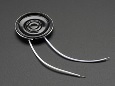
Experts from around the world attended the patient, most of them out of sheer curiosity. The patient, an otherwise healthy male in his thirties, welcomed the attention on the basis that it was exactly what he wanted. It was creating a worldwide audience that would in time understand the message he was trying to get across. What was not immediately apparent was the fact that the patient, had a tiny speaker tucked in beside his blood-pumping organ. With the use of the latest nanotechnology, customised Bluetooth, and a couple of other things, he was able to have a song in his heart.

The room that the patient occupied was packed with all kinds of medical specialists. They took it in turns to place their stethoscopes on the man’s chest and listen to something more than a heartbeat. When they had all listened and were standing around conferring with each other, they all slowly became aware of the movement in the bed.

The patient raised his hand.

The closest doctors standing either side of the bed leant over the man

The man in the bed whispered, “There’s a song in my heart.”

“What did he say?” asked the other specialist.

“He said, there’s a song in my heart.”

“He’s right,” said the orderly, standing in the corner.

Someone said, “What?”

“It’s Perry Como, singing, ‘They can’t take that away from me.’”

This whole idea, as set out above, is either a completely fanciful notion or a really good idea…

Impermanence

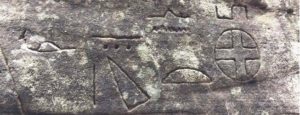
We are hieroglyphics.

We do our job. We do the best we can. We do what we can in the whole scheme of things. In every manner we are charged with giving meaning to things, all sorts of things, so many things, and indeed everything. With etching, engraving, drawing, printing, typing and writing. We are scribbled in notebooks, traced with flowing ink, embossed on tablets, branded on cattle, stamped on plastic tiles, carved on trees and sprayed on walls.

Sometimes large, sometimes small, indoors, outdoors, in every form, in every language, in every country, on monuments, record covers, cereal packets and photos. We fill the tiny labels on jars and bottles, state the rules on highways, we proclaim values on price tags, we are the grooves of remembrance in cemeteries. We say so much; when to use by, what the weight, what the colour, what the flavour, what the size. We mark pyramids, milestones and obelisks.

Even when chipped into rock and stone, we take on an unavoidable attribute.

Even then, we are impermanent.

Bees

The old man was leaning forward, motionless.

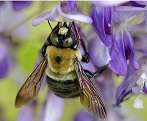
He looked on in wonder as several bees swarmed around the Wisteria bush. The park had lots of flower beds scattered along the footpath. This one had a bench opposite a particularly large arrangement of colourful plants, spilling out onto the walkway. He was fascinated by the methodical way the insects went about their tasks.

As the woman approached she looked at her watch before stopping. “Excuse me, are you OK?”

He looked up. “I beg your pardon?”

She smiled, saying, “I was asking if you were all right.”

“Oh! That’s very kind of you. Yes, thank you. Quite all right.” He pointed at the bush. “I was just watching these ladies busy collecting pollen.” He gave a quick nod. “I say ladies because these bees are all female. They’re the workers you see? They’re busy collecting pollen and nectar to feed the colony. It really is amazing, you know?”
Checking the time again, she said, “Yes, I suppose it is,” smiled and went to move off.

He pointed again and asked, “Do you know why there are so many of them here, at this particular bush, I mean?”

She looked around. “No, not really.”

He sat back on the bench with his hands clasped on his lap. ‘It’s the colour, you see,” he said with a wink. “These marvellous creatures have a preference for certain colours.”

She was now shifting from foot to foot. “Really? Look, I really must go…”

“It’s the colour purple that really attracts them,” he said. “That’s why they’re buzzing around this Wisteria.”

Walking away, she said, “Thanks, that’s very interesting. Sorry, running a bit late now.”

He raised his voice. “It’s not just the colour,”

“It’s not?” she replied, still walking away.

He called out, “It’s the fragrance.”

Further away now, she said, “Really?”

“Yes, they love the smell of Wisteria,” he cried.

“The honey bees have an incredibly sensitive sense of smell, even when they’re in flight,” he shouted.

Still walking, she waved over her shoulder without looking back.

Even louder, he yelled, “They can even use their sense of smell to locate other bees!”

She probably didn’t hear him.

Habits

She found Dad in the lounge, stretched out on the settee, holding his book.

This was the way he liked to spend his Sundays. He was such a creature of habit. Mum used to complain about it. He had these little habits of always doing things the same way, in the same order, at the same time. Her brother used to say that it took her to an early grave, but she didn’t think so.

She held his wrist; it must have happened in the last half hour.

Theory

He had a theory about protecting himself from getting sick.

Well, not just him but others. He considered it to be a remarkable panacea. He’d read about measles parties, where parents arrange a social activity for their children in order to deliberately expose them to an infectious disease. His idea was that the moment a person feels the slightest whiff of sickness coming on, they get themselves off to a really crowded venue. He postulated that by doing this at a time when the immune system is kicking in and becoming fully active, it will immediately start working on combatting any disease or infection. If a person were to attend such a place as this at a time when they were absolutely fit and in perfectly good health, one’s body’s natural defences are simply not ready to cope with the onslaught of any virulent disease.

He was thrilled with the fact that circumstances had provided him with the perfect opportunity to put his theory into practice. He was feeling just a wee bit under the weather. At that time, it just so happened that there seemed to be quite a lot of flu cases sweeping the country. He had tickets for a football match and he had read in the paper that many ticket holders were cancelling for fear of catching a dose of what was going around. He found the reduction of numbers attending disappointing, but there would still be enough of a crowd for him to mingle with.


hadn’t gone exactly according to plan, but a couple of days later he was still talking about it.

However, nobody in the hospital ward was at all interested in his ideas.

Evidence

The trial itself had gone on for several weeks.

Now, in the jury room, it had been going on for days. Everyone was getting tired and worn down by the endless cycle of debate and sometimes argument. Just one troublesome member was holding out, and he wouldn’t be moved. He kept putting ‘not guilty’ on the voting slips that were passed around. The men and women of the jury sat glaring at him when, yet again, the slips were counted.

The odd man out squirmed a little before speaking. “It’s the principle, isn’t it? Innocent until proven…”

The most aggressive member slapped the table. He said, “Surely, it’s a pretty straightforward case. All the evidence is there.”

Troublesome said, “You say all the evidence.”

Aggressive replied, “Yes, the DNA! It has him banged to rights. There may be some doubt about the fingerprint identification and I agree that the blood type was inconclusive, but you can’t question the DNA.”

Troublesome shook his head. “But, that’s it, isn’t it? You’ve hit the nail on the head there, you certainly can question the DNA.”

“What do you mean?” said aggressive.

Troublesome threw up his arms. “Look, all I’m saying is mistakes have been made in the collection process, as well as cases where samples have been mislabelled. The chain-of-custody process can go wrong and has shown up as being a matter of human error.” He shrugged. “That’s where there has to be some doubt.”

The foreman said, “You know, he does have a point.”

It may well be that a killer went free that day… legally.

Bereavement

There was an eerie quietness all about as she moved through the trees.

She could feel the great sadness welling up through mother earth. Her ears took in every single song that birds were singing. Her fingertips stroked each passing ancient tower, tumbling over bark that had always been, since time began. She felt the silent budding of seeds beneath her feet. She stopped occasionally to confirm the growth of moss and lichen, to breathe in the tangle of the forest’s decay and rebirth. She, being one with the beating heart of nature, made her way through familiar, leaf-matted trails, fearful of what lay ahead.

Her heart sank at the discovery. It was a natural death, but still a death. A period of great mourning would follow. Her tears fell as a howl went through the forest that only she could hear.

She sat grasping its horn, and something was gone. Something was lost. Much sadness would follow.

For the great forest always grieved over the loss of a unicorn.

Bog

It was taken as given that night walkers quite naturally avoided the area.

Nobody actually knew what these strange apparitions that floated and swirled across the surface of the bog actually were. Of course, there were any number of stories about the phenomena. As to what they were precisely, was anybody’s guess. Generally, the spectrum of opinions fell into two major categories. One school of thought was that it was a troubled Will-o’-the-wisp, or for that matter any number of them, unhappy spirits that restlessly wandered around when the conditions were right. On the other hand there were others that maintained that these things were merely a phosphorescence, brought about by the spontaneous combustion of methane gas, made visible by decomposing organic matter.

On the basis that the latter scientific explanation was incorrect, it seemed that a great gathering of these tormented spirits had taken on a new form. Whereas, individually, these less than contented spirits offered little real harm, save giving innocent passers-by a bit of a fright, what was taking place was quite different, and definitely exceptional. There seemed to be a never-before-seen coalescence going on in the marshy wastes that lay just beyond the outskirts of the village. Why this particular bog and this very village had been selected was something that was not likely to ever be made clear.

A late night cyclist was the first to witness the terrifying event and hastened into the village with the news. There was a dreadful howling and a great swirling mass he told them, and it was building into something of a truly frightful size and power. The great, dark twisting cloud, with a flickering of lights spinning within it, grew with amazing speed as he looked on. Then it grew louder and rose and began moving towards the unsuspecting community. As word got around that this malignant force was coming their way, it became evident that the thing was bent on striking fear into the hearts of the village dwellers; and quite probably something a lot worse.

In no time at all the great seething mass of evil swept slowly through the main street as people ran screaming. All were finding some kind of shelter despite their not knowing if this would protect them. All but one, that is. An old man was walking slowly across the now empty street. He stopped halfway across and seemed to turn to face the oncoming horrifying spectacle. The old man in question had been born both blind and deaf, hence he had made his way through life in a dark and silent world that he had made his own. He had no knowledge of the events unfolding around him. He heard nothing, and he saw nothing, but he felt a strange air movement about his face and hands as he stood motionless.

In the briefest of moments, the thing, whatever it was, vanished, leaving an eerie silence.

It transpired that the evil was eradicated instantly when confronted by an apparent insouciance!